

STD Testing
Fast, Private, Secure
Get tested for your peace of mind today!
OR CALL (866) 872-1888
FEATURED ON





I just wanted to comment on how helpful and accommodating Jessica has been with my testing.
Dave
Alex has went above and beyond to make sure I was informed about the different tests and how they work!
Carolyn
Vince thank you, your team was so helpful, kind, patient and just wonderful. Special thanks to Jessica.
Mike
Julie thank you for your empathetic view of this from the very concept to the process. I was truly sick to my stomach
Scott
Get Tested in Three Easy Steps
Order Tests
Choose a test panel or individual test. Then complete your order online and test today.

Visit a Test Center
With over 2,500 Test Centers nationwide you can always get tested locally.
Get Your Results
In 1-2 days, you will receive a “Results are Ready” email. Just login and view your results.
Order Tests
Choose a test panel or individual test. Then complete your order online and test today.
Visit a Test Center
With over 2,500 Test Centers nationwide you can always get tested locally.
Get Your Results
In 1-2 days, you will receive a “Results are Ready” email. Just login and view your results.
Thankfully, you can get results FAST and nobody has to know
With Rapid Screenings, you can get your results in as little
as 1-2 business days.
Most STD testing centers take up to 2 weeks to provide results.
Plus, with us, nobody has to know you're getting tested
or know your results.
Not your partner, not your doctor, not your insurance, not even
your credit card or bank.
If you test positive for anything, it will stay off your health record.
This will keep your insurance from flagging you and raising your rates.
If you test negative, you can choose to get reimbursed by your insurance.
Most importantly, we're here to take care of you and give you peace of
mind ASAP with expert care from our trained counselors.
You get results fast, so you can stop stressing and start living
your life again!

Our Story
We met at an STD testing company we worked at in St. Louis back in YEAR. But the company had several issues.
The owner was personally irresponsible, practiced unethical behaviors, and constantly paid employees late. Seeing an irresponsible "businessman" making so many questionable choices, inspired us to create a business based on good ethics.
That's when we joined forces and started Rapid Screenings Center. Since 2008, we've provided FAST, CONFIDENTIAL testing nationwide so people can live happy, healthy lives.
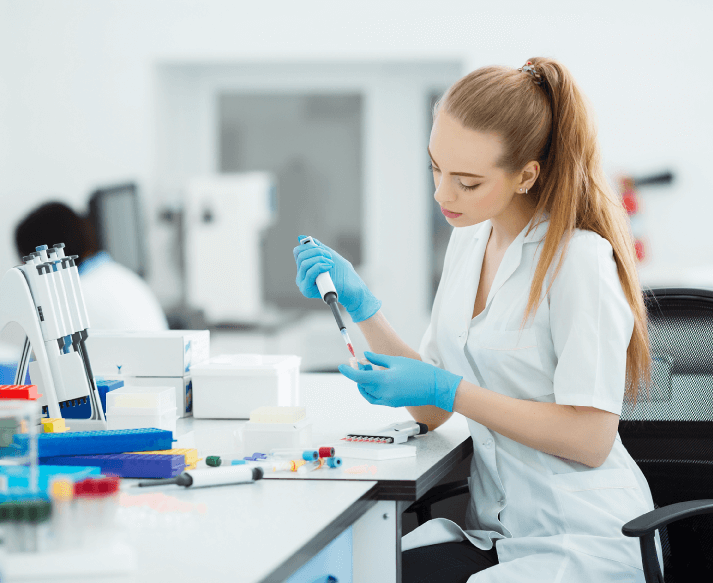


Here's how we work:
1. We find out why you're calling. Did you have a sexual encounter? Are you experiencing symptoms? To provide you with the proper testing you need, we need to understand what happened.
3. From there, we will email you the forms you need to get tested. Usually, all you need is a urine and blood test. You're free to eat or drink before testing, but we ask you not urinate for an hour before testing.
5. Get your results in 1-2 days. Once we have the results, you can log on to our secure portal to check them.
2. Once we know the testing you need, we find a location near you and schedule you for a visit. We can usually provide same-day testing.
4. You go to that local testing center at a time that works for you... No appointment needed.
6. If you have any positive test results, a doctor will call you and give you your treatment. We send any prescriptions to the pharmacy of your choice. If a patient tests positive for HIV, we continuously follow up and ensure they have all the resources they need to live a long, healthy life.
Rapid STD Testing VS Other STD Clinics
| testing |

|
FREE STD CLINICS |
|---|---|---|
| No Appointment needed | ||
| Just one 10-15 minute lab visit | ||
| Results usually in 1-2 days | ||
| Over 2,500+ labs nationwide | ||
| Most labs open Monday-Saturday | ||
| Doctor consult by PHONE | ||
| Easy blood and/or urine sample | ||
| Results posted to secture online accout | ||
| Lab locations test for many health issues | ||
| People dont know why you are there |